

Internal linking strategies for SEO are one of the smartest, most underused ways to boost your website’s visibility on Google. If you run a business, blog, or e-commerce store in the United States, you already know how competitive search results can be. A well-planned internal linking strategy does not just help search engines crawl your site better — it actually moves “link equity” (that valuable ranking power) from your strong pages to the ones that need it most. The result? Higher rankings, more organic traffic from American searchers, and a smoother experience for your visitors.
In 2026, Google’s core updates continue to reward sites that feel helpful, well-organized, and easy to navigate. Poor internal linking leaves important pages buried deep or completely invisible to crawlers. But when you get it right, you can improve rankings with internal linking, fix crawl depth issues, and turn your website into a powerful topical authority machine. This SEO internal linking guide is written in simple English for beginners and packed with actionable tips that US SEOs are using right now.
Whether you manage a small local business site in New York, a national blog, or a large e-commerce platform serving customers from California to Texas, these internal linking strategies for SEO will help you stand out. Let’s dive in.
What Is Internal Linking and Why It Matters for SEO in 2026
Internal linking means adding hyperlinks that point from one page on your website to another page on the same website. Unlike external backlinks that come from other domains, internal links are completely under your control.
Search engines like Google use these links in two big ways. First, they help crawlers discover and index new pages — this is called crawl ability and indexation. Second, they pass link equity (also known as PageRank) around your site. Pages with more high-quality internal links pointing to them are seen as more important, which can directly improve their rankings.
In the United States, where local search is huge, internal linking also supports local SEO. For example, a plumbing company in Chicago can link its service pages to location-specific landing pages. This strengthens content hierarchy SEO and helps Google understand your site’s structure for local pack results.
Recent data shows that fixing internal linking issues SEO can deliver 5–7% lifts in organic traffic for many sites. That’s real growth without spending extra on ads or new content. Plus, good internal links keep users on your site longer, reducing bounce rates and signaling quality to Google.
Internal Linking Best Practices SEO That Actually Work
Let’s look at internal linking best practices SEO that top US professionals follow in 2026. These are simple but powerful.
- Keep crawl depth under three clicks. Important pages (your money pages, pillar content, or local service pages) should be reachable from the homepage in three clicks or fewer. This is called crawl depth optimization.
- Link contextually, not randomly. Every internal link should feel natural and helpful to the reader. This is contextual internal linking SEO at its best.
- Aim for 5–10 internal links per 2,000 words of content. Too few and you waste link equity. Too many and Google may ignore them.
- Use descriptive anchor text. More on this later, but avoid generic “click here” phrases.
- Prioritize user experience. Links should help readers find what they need next — not just chase rankings.
These internal linking best practices SEO create a strong website architecture SEO that both users and Google love.
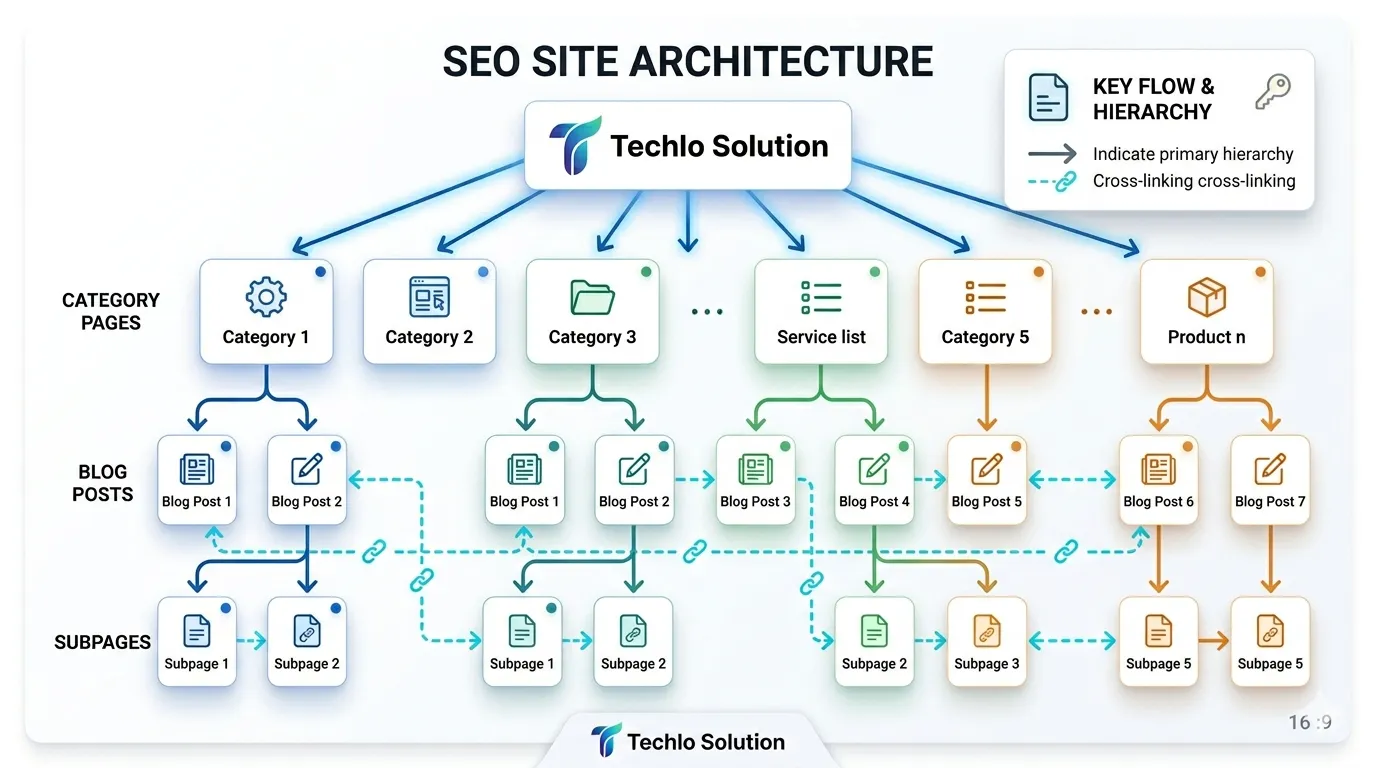
How to Build Internal Links for SEO: A Simple Step-by-Step Process
Wondering how to build internal links for SEO? Here’s an easy beginner-friendly process:
- Step 1: Map your site structure. Draw a quick diagram or use a free tool to see your homepage, category pages, blog posts, and product pages. This helps you spot weak spots in your internal linking structure for SEO.
- Step 2: Identify high-authority pages. Look at pages that already rank well or get the most traffic. These are your link equity sources.
- Step 3: Find opportunities in existing content. Open your top blog posts and add 2–3 relevant internal links where they make sense for the reader.
- Step 4: Create new content with linking in mind. When writing a new blog post, plan links to your pillar pages or related cluster content.
- Step 5: Review and update old content. Every quarter, revisit older posts and add fresh internal links. This is one of the fastest ways to improve rankings with internal linking.
US SEOs often combine this with Google Search Console data to see which pages Google is already crawling well and which need more links.
Internal Linking Strategy for Websites: From Silos to Topic Clusters
An effective internal linking strategy for websites starts with understanding two popular models: silo structure and topic clusters.
Silo structure internal linking groups related content together. For a US fitness brand, you might have a “Weight Loss” silo that links only to pages about diet, workouts, and supplements. This creates clear content hierarchy SEO and helps Google see your topical expertise.
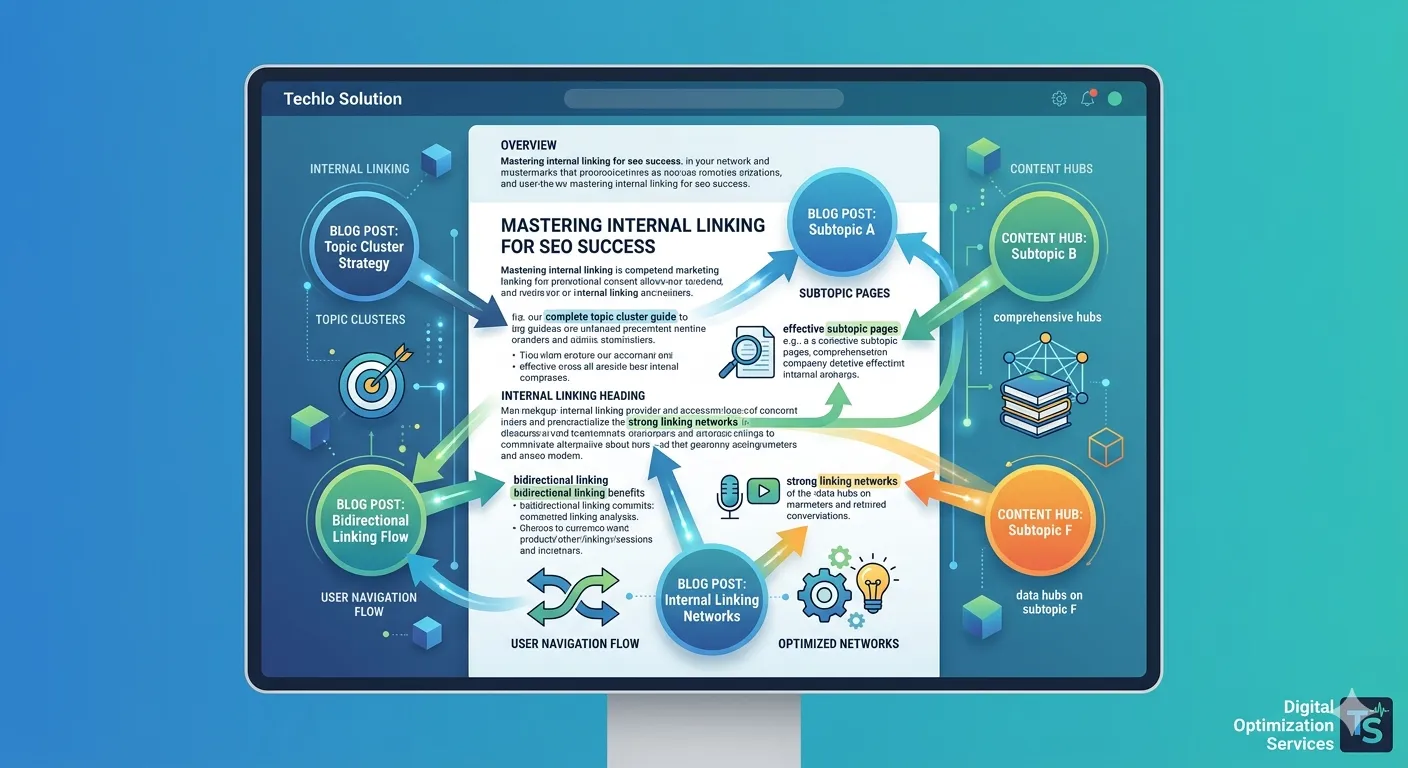
Topic clusters and pillar pages are even more powerful in 2026. A pillar page is a comprehensive guide (for example, “Complete Guide to SEO for Small Businesses in the USA”). Cluster pages are shorter, specific articles that link back to the pillar and to each other. This bidirectional linking builds massive topical authority.
For large websites, combine both models. Use silos for broad categories and topic clusters inside each silo. This is especially useful for internal linking for large websites, where pages can easily get lost without a clear plan.
Internal Linking Structure for SEO: Flattening Your Site Architecture
Your internal linking structure for SEO should feel like a well-organized house — everything is easy to find. Here are proven techniques:
- Link from your homepage to main category and pillar pages.
- Use breadcrumb navigation SEO on every page so users (and Google) always know where they are.
- Create hub-and-spoke models inside topic clusters.
- Add related posts sections at the bottom of blog articles.
For US-based sites, include internal links to state or city pages. A law firm in Los Angeles can link its “Divorce Law” pillar page to “Divorce Lawyer Los Angeles” cluster content. This strengthens both national and local SEO signals.
Anchor Text Optimization Internal Links: Getting It Right in 2026
Anchor text optimization internal links is one of the highest-impact areas. Anchor text is the clickable words in your link.
Best practices:
- Make it descriptive and natural (e.g., “internal linking checklist SEO” instead of “click here”).
- Use variation — mix exact-match, partial-match, branded, and generic phrases.
- Keep it concise (2–5 words usually works best).
- Place important links higher in the content when it feels natural.
Avoid over-optimization. Google is smart in 2026 and can spot unnatural patterns. Focus on anchor text variation strategy that sounds human.
Internal Linking for Blog SEO and Content Hierarchy
Blogs are goldmines for internal links. Internal linking for blog SEO works best when every new post links back to older relevant content and to your pillar pages.
Example: You publish “How to Rank Higher in Google in 2026.” Inside that post, link to your older article on “Keyword Research for Beginners” and your pillar page on “SEO internal Linking Guide. Provide three related blog articles at the conclusion.
This approach improves page authority flow SEO and keeps readers engaged longer — perfect for US audiences who love in-depth, helpful content.
Website Internal Linking Audit: Your Complete Internal Linking Checklist SEO
A regular website internal linking audit is essential. Here is your ready-to-use internal linking checklist SEO:
- Check for orphan pages SEO fix (pages with zero incoming internal links).
- Measure average crawl depth.
- Review anchor text distribution for over-optimization.
- Ensure every important page has at least 3–5 internal links pointing to it.
- Test mobile navigation and breadcrumb links.
- Use tools to find broken internal links.
- Analyze link equity distribution SEO using crawl data.
Run this audit every 90 days. Many US agencies use free or low-cost tools to stay on top of it.
Internal Linking Tools SEO Every US Marketer Should Know
You don’t need expensive software to start. Top internal linking tools SEO include:
- Google Search Console (free) — shows internal link reports and crawl stats.
- Screaming Frog SEO Spider (great for large sites) — finds orphan pages and crawl depth issues.
- Ahrefs or SEMrush site audit features — suggest linking opportunities.
- Free WordPress plugins like Link Whisper or Yoast for automated suggestions.
These tools make fixing internal linking issues SEO much faster.
Internal Linking for Large Websites: Scaling Without Losing Control
Internal linking for large websites requires automation and governance. Set team rules: every new piece of content must include at least three contextual internal links. Use content calendars that flag linking opportunities. For enterprise sites, consider AI-assisted tools that suggest links based on topic relevance while keeping the human touch.
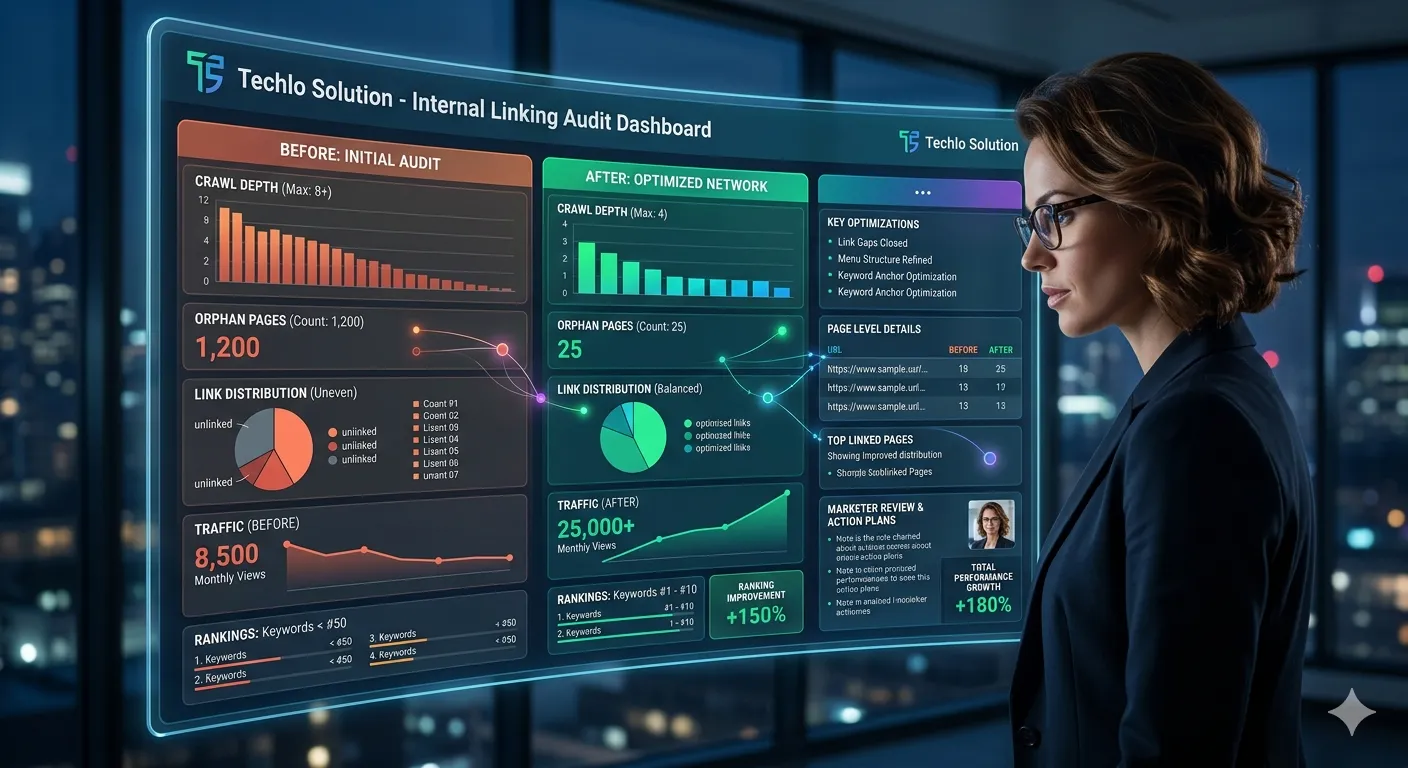
Improve Rankings with Internal Linking: Real-World Results
When you apply these internal linking SEO strategy 2026 tactics, you will see results. US SEOs report faster indexing of new pages, better rankings for cluster content, and higher conversion rates because visitors find what they need faster.
One common win: recovering orphan pages by adding just a few strategic links from high-traffic blog posts. Another is strengthening local SEO by linking service pages to location pages — a big help for businesses targeting cities like Miami, Seattle, or Chicago.
Authoritative Resources on Internal Linking for SEO
To better understand internal linking strategies and improve your website SEO performance, explore these trusted resources:
- Google Internal Linking Best Practices – Learn how Google uses internal links to crawl and understand your website structure.
- Internal Linking Guide (Moz) – A complete beginner-friendly guide to internal linking and SEO structure.
- Internal Links for SEO (Ahrefs Guide) – Advanced strategies to improve rankings using smart internal linking.
- Internal Linking Strategy (SEMrush) – Learn how to build a strong internal linking structure for better SEO performance.
Conclusion: Start Implementing Your Internal Linking Strategy Today
Internal linking strategies for SEO are not complicated, but they do require consistency and a user-first mindset. By following this SEO internal linking guide, you can create a powerful, crawl able, and authoritative website that ranks higher in 2026 and beyond.
Don’t wait for your competitors to catch up. Open your top 10 blog posts today and add 2–3 contextual internal links. Run a quick website internal linking audit this week. The results will compound over time.
Ready to take your SEO to the next level? Share this guide with your team, bookmark it for future audits, and start building a stronger internal linking structure for SEO right now. Your future rankings — and your US visitors — will thank you.
My Real-World Experience Learning Digital Marketing
When I first started learning digital marketing, terms like SEO, Google Ads, and content marketing felt overwhelming. I honestly thought this field was only for tech experts, but with consistent practice, I realized that beginners can learn digital marketing step by step. In the beginning, I made the mistake of trying to learn everything at once, which only created confusion. Once I focused on one skill at a time, especially SEO basics, my understanding improved significantly. While learning SEO, I discovered that simply adding keywords is not enough. When I started writing content to genuinely help users, I noticed organic traffic from the United States slowly growing. Many students enter digital marketing expecting quick income, but based on my experience, focusing on learning and real practice first always leads to better long-term results. Using tools like Google Search Console helped me understand what people are actually searching for. At first, it felt confusing, but regular use made it easier to analyze real user behavior. At one point, I focused too much on writing for search engines instead of real readers. Once I shifted my approach to helping people first, my content performance improved. If you are a student or beginner, digital marketing can be a realistic and future-proof career, as long as you stay patient and trust the learning process instead of chasing shortcuts.
 Call-to-Action (CTA) Click Here
 Start today by investing in SEO, content, or social media marketing Audit your online presence Consider professional digital marketing services for small businesses
The businesses that win in 2026 are the ones that act today.
FAQs About Internal Linking Strategies for SEO
What are the top internal linking best practices SEO in 2026?
Focus on contextual links, descriptive anchor text, crawl depth under three clicks, fixing orphan pages, and using topic clusters. Always prioritize user value over manipulation.
How do I create an internal linking strategy for websites?
Start with a site map, identify pillar pages, build topic clusters, and ensure every page has incoming links from relevant content. Review quarterly.
What is the best way to do internal link optimization techniques?
Use natural, varied anchor text, place links where they help readers, and distribute link equity from strong pages to important ones.
How can internal linking improve rankings with internal linking for my US site?
It passes authority, improves crawl ability, strengthens topical relevance, and keeps users engaged longer — all signals Google loves.
What is a good internal linking checklist SEO?
Check crawl depth, orphan pages, anchor text variety, link relevance, and mobile navigation. Audit every 90 days.
How does internal linking work for large websites?
Use silo or hub-and-spoke models, automate suggestions with tools, and maintain strict linking guidelines so the structure stays flat and organized.
What is contextual internal linking SEO and why does it matter?
It means linking only when the link adds real value to the reader. Google rewards natural, helpful links more than forced ones.
How do I fix internal linking issues SEO quickly?
Run a crawl with Screaming Frog, find orphan pages and deep pages, then add relevant links from high-traffic content.
Does internal linking help with local SEO in the United States?
Yes! Linking service pages to location pages and using breadcrumbs helps Google understand your local presence and boosts local pack visibility.
What is the difference between internal vs external linking SEO?
Internal links stay inside your domain and distribute your own authority. External links bring new authority from other sites. Both are important, but internal ones are free and fully controllable.
✍️ Author Bio (E-E-A-T Fix)
Written by Techlo Solution
Digital Marketing Learner & SEO Practitioner
Helping beginners and students understand online marketing in simple words.
One thing that’s easy to miss with internal linking is the correlation between topic clusters and ranking stability. If your links just wander randomly across the site, Google sees scattered content. We’ve found that grouping links between related posts signals topical authority effectively and we documented a version of this approach in our internal linking FAQ.