

How Digital Marketing Channels Work
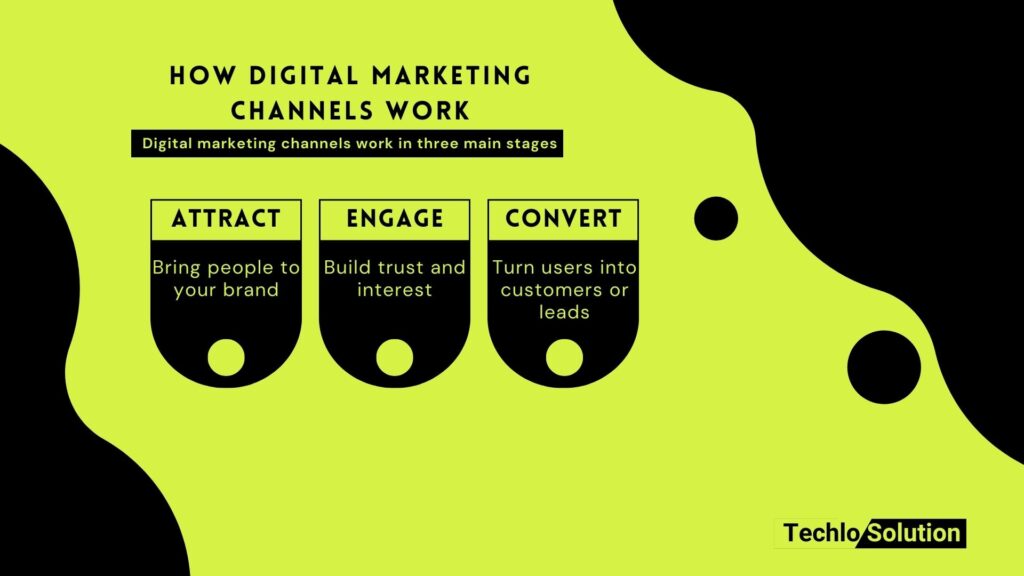
Digital marketing channels generally work in three main stages:
Attract – Bring people to your brand
Engage – Build trust and interest
Convert – Turn users into customers or leads
Some channels are organic, while others are paid.
Organic vs. Paid Digital Channels
Organic Digital Marketing Channels
SEO
Content marketing
Organic social media
Email (non-paid lists)
Benefits of organic channels:
Take time but build long-term growth
Cost-effective
Help build authority
Paid Digital Marketing Channels
Google Ads
Social media ads
Display advertising
Influencer sponsorships
Benefits of paid channels:
Deliver faster results
Require a budget
Easy to scale
 In 2026, successful marketers combine both organic and paid channels.
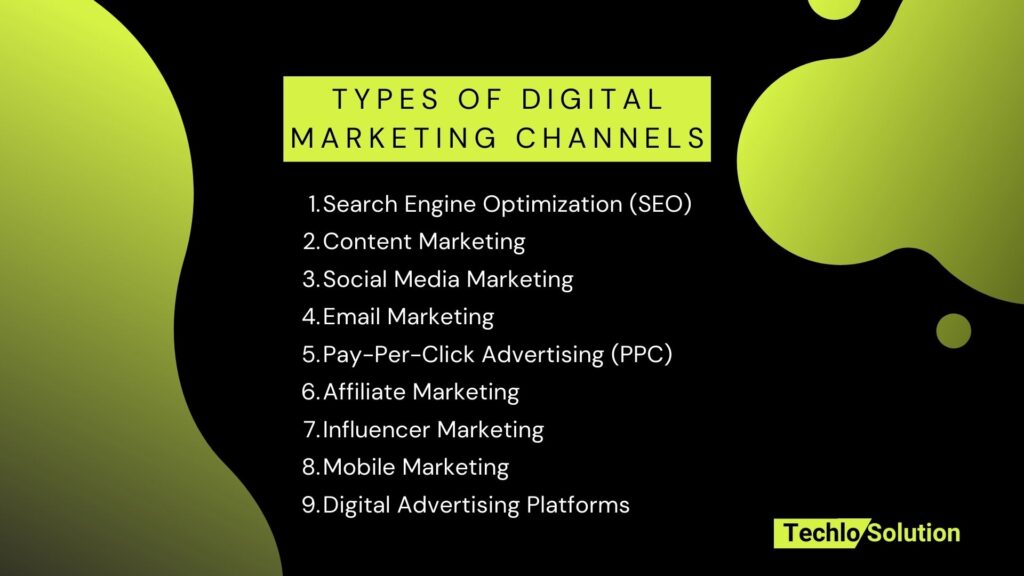
1. Search Engine Optimization (SEO)
What SEO Does:
SEO helps websites rank higher on Google when people search.
Example:
A student searches: “Best digital marketing courses in the USA.”
SEO ensures the best content appears on page one.
Why SEO Matters in 2026:
Over 90% of online experiences start with a search
Local searches drive real-world action
SEO brings free, long-term traffic
Takeaway: SEO is a must-learn skill for students.
2. Content Marketing Channels
Content marketing focuses on creating helpful content.
Common content channels:
Blogs
YouTube
Podcasts
Guides & ebooks
Case studies
Why it matters: Builds trust and authority, especially for beginners and startups.
Student Example:
A student creates a blog explaining digital marketing channels and gets internship offers.
3. Social Media Marketing
Social media is one of the most powerful marketing channels in 2026.
Popular platforms:
Instagram
TikTok
LinkedIn
Facebook
X (Twitter)
Why Social Media Matters:
Builds personal brands
Drives engagement
Ideal for students & startups
Supports influencer marketing
Social media marketing is perfect for beginners.
4. Email Marketing Basics
Email marketing remains one of the most profitable channels.
Uses:
Newsletters
Course updates
Promotions
Educational emails
Why it works:
Direct communication
Personalization & automation
Low cost
Students learn customer retention and funnel-building through email marketing.
5. Pay-Per-Click Advertising (PPC)
In PPC advertising, you only pay when someone clicks your ad.
Common platforms:
Google Ads
YouTube Ads
Facebook & Instagram Ads
Best for:
Fast traffic
Product launches
Testing ideas
Understanding PPC is essential for performance marketing careers.
6. Affiliate Marketing
Affiliate marketing lets you earn commissions for promoting products.
How it works:
Promote a product link
User buys → you earn a commission
Popular among bloggers, YouTubers, and students seeking passive income.
7. Influencer Marketing
Influencer marketing uses trusted creators to promote brands.
Platforms:
Instagram
TikTok
YouTube
2026 Trend: Micro-influencers perform better than celebrities.
Students can become influencers by building niche audiences.
8. Mobile Marketing
Mobile marketing targets users on smartphones.
Includes:
SMS marketing
Push notifications
Mobile apps
Location-based ads
Since most US users browse on mobile, this channel is growing fast.
9. Digital Advertising Methods (Display & Video)
Digital advertising goes beyond search.
Examples:
Banner ads
YouTube video ads
Retargeting ads
Native ads
These methods increase brand awareness and conversions.
Real-World Examples
Amazon → Email + PPC + SEO
Nike → Social media + Influencer marketing
Local US restaurant → Google Maps + Instagram
Students → LinkedIn + personal blogs
Channels often work together, not in isolation.
Best Digital Marketing Channels for Students in 2026
Start with:
SEO (fundamentals)
Content marketing
Social media marketing
Email marketing basics
Analytics tools
Benefits:
Internships
Entry-level jobs
Freelance work
Digital Marketing Channels for Startups
Startups favor digital channels because they are:
Affordable
Scalable
Measurable
Best channels for startups:
SEO
Content marketing
Social media
PPC (small budgets)
Beginner-Friendly Digital Marketing Tools
Tools make learning channels easier:
Google Analytics
Google Search Console
Canva
Mailchimp
Meta Ads Manager
These are widely used in US companies.
Digital Marketing Trends in 2026
Key trends students should know:
AI-powered marketing tools
Short-form video dominance
Voice search optimization
Personalization & automation
Data privacy awareness
Channels are evolving, but fundamentals remain the same.
How to Choose the Right Channel
Ask yourself:
What is my goal?
Who is my audience?
What is my budget?
Organic or paid?
There is no “one best channel.” Success comes from a clear strategy.
Conclusion: Master Digital Marketing Channels Step by Step
Understanding digital marketing channels is the foundation of a successful career in 2026.
For students:
Gain job-ready skills
Build career flexibility
Get real-world experience
Access future-proof opportunities
FAQs – Digital Marketing Channels
Q1: What are digital marketing channels?
They are online platforms and methods used to promote brands and reach customers.
Q2: Which channel is best for beginners?
SEO, content marketing, and social media are the best starting points.
Q3: Are digital marketing channels changing in 2026?
Yes, but core channels like SEO, email, and social media remain essential.
Q4: Can students learn these channels easily?
Yes. With consistent practice, students can master them in months.
Q5: Do I need to learn all channels?
No. Start with one or two, then expand over time.
My Real-World Experience
When I first started learning digital marketing, I honestly felt overwhelmed. Terms like SEO, Google Ads, and content marketing sounded complicated, and I thought this field was only for tech experts.
At first, I made the mistake of trying to learn everything at once. It only left me confused and frustrated. Then I realized I needed a different approach: focus on one skill at a time. I started with SEO, and slowly, everything began to make sense.
I also learned an important lesson: just adding keywords isn’t enough. You need a strategic approach—understanding your audience, creating useful content, and thinking like a marketer.
Once I took it step by step, learning digital marketing became not just manageable, but actually exciting.
Author Bio
Techlo Solution
Digital Marketing Learner & SEO Practitioner
Helping beginners and students understand online marketing in simple words.