
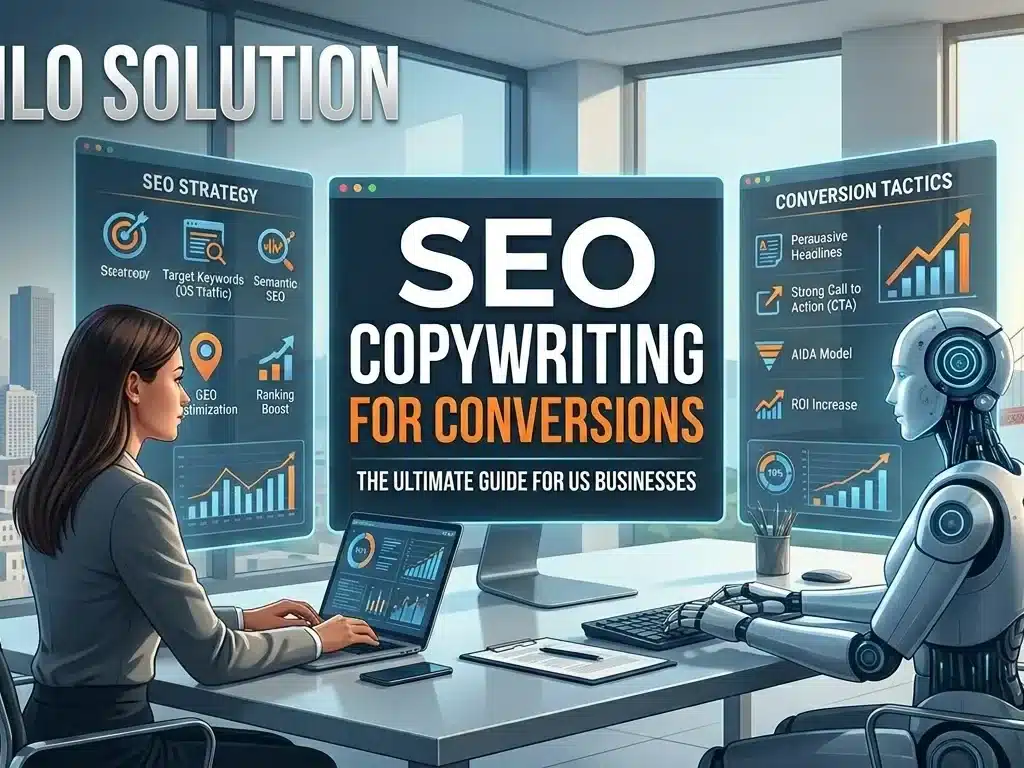
2026 is a year in the US digital market where the old adage “content is king” is outdated. Now the new mantra is: “context is king, and conversion is queen.” Millions of articles are published every day, but 90% of them never make it to the first page of Google, and those that do, often fail to generate sales.
SEO copywriting is not a game of surfing the web; it is a complex combination of psychology, data science, and search engine algorithms. In this guide, we will discover the “secret sauce” that turns a casual visitor into a loyal customer.
Section 1: The Psychology of the 2026 American Consumer
First, we need to understand what goes on in the mind of a typical American when they search for something on Google. 2026 user Over whelmed suffers from “information overload”.
2-second attention span filter
In the USA, the attention span has been further reduced to 2-3 seconds. This means that your first paragraph and your headline should be “mind magnets”. If you do not explain the user’s problem in the first two lines, they will press the “back” button, which in SEO parlance is called “pogo sticking”. This is obvious for your ranking.
Trust deficit or authenticity
In the world of AI, everyone is creating content. Therefore, American users now look for “authenticity”. They want a human to talk to them, not a machine. Adding a “human voice” to SEO copywriting is no longer optional for change, but mandatory.
Section 2: Alignment of Intent – The Real Purpose of Search Engines
The biggest mistake people make in SEO copywriting is to focus on “keyword optimization” and forget about “intent.”
1. Informational Intent (Learning)
If someone is searching for “What is SEO Copywriting?”, they are not in the mood to learn. They are here to find out. This is to give you “deep educational content” so that you can build your authority.
2. Business Research (Mozna)
“Best SEO Copywriting Tools 2026.” Here we are looking at user preferences. At what stage should you provide comparison tables and unbiased reviews when you are close to converting?
3. Transactional Intent (Buy)
“Hire SEO Copywriter in New York.” This is the “money keyword.” This is the user’s wallet. Your copy here should be “Direct, Bold, and Persuasive.”
Section 3: Anatomy of a High-Converting Headline.
The headline is the door through which the user enters your world. If the door isn’t attractive, no one will come in.
The Magnetic Headline Formula
In America, “profit-driven” headlines are all the rage. An old headline was: “SEO Copywriting Tips.” Am I not a wise guy? The headline focused on change in 2026 will be: “7 SEO Copywriting Secrets That Will Double Your Sales in 90 Days (Without Increasing Your Ad Spend).
Combining Curiosity and Urgency
The headline should create a “gap” that leaves a mark in the user’s mind until they click, the “itch” in their mind that won’t be satisfied until they click. This is called the “information gap theory” in psychology.
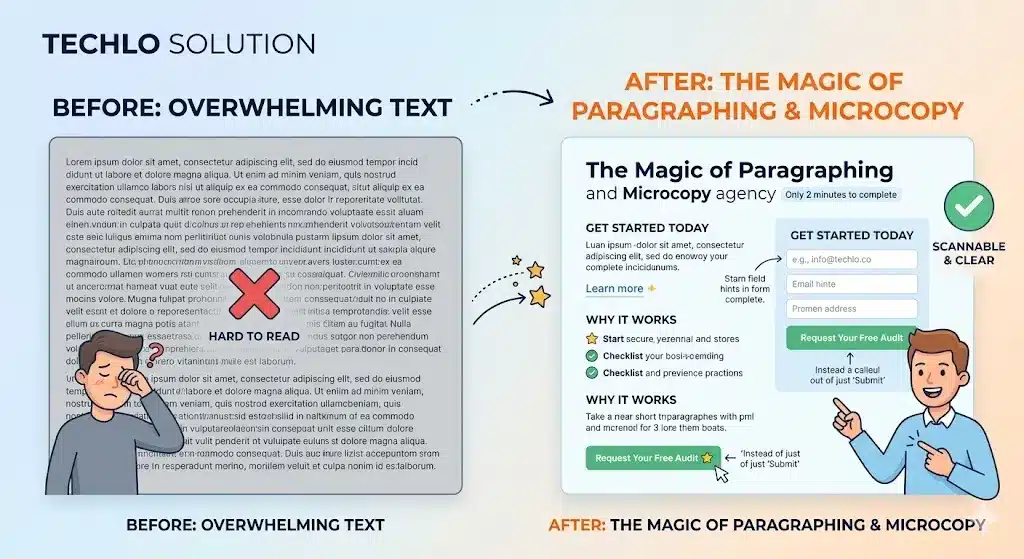
Section 4: The Magic of Paragraphing and Microcopy
You’ve probably noticed that long paragraphs tire you out. “Breathable Content” is the key to change in 2026.
The “One Idea Per Paragraph” Rule
Say one thing per paragraph. If your paragraph is longer than 4 lines, do it well. Logs in the USA are more mobile-friendly, and 4 lines make a big block on a mobile screen.
Bullet Points and White Space
Bullet points are not a list; they are “comfort zones” for support. When a reader sees bullet points, they feel that the information is easier to digest.
Section 5: Semantic SEO – Thinking Beyond Keywords
Google no longer looks at the fun of the page, it looks at the whole “tip cluster”.
Using LSI (Latent Semantic Indexing)
If your topic is “copywriting”, these keywords should naturally appear in your content: sales funnel, conversion rate, persuasion, AIDA model, headlines, readability. If these keywords are not there, Google will think your content is “thin”.
Entity-based SEO
Entities (posts, places, things) are important in 2026. Google will think your content meets “Experience, Authority, and Trustworthiness” (E-E-A-T) by including real-world examples and US-based case studies in your content.
Section 6: Case Study – “Silicon Valley SaaS Growth”
Client: A software company ready for a “project management tool”. Problem: Traffic was high but leads weren’t signing up for the “free trial”.
Copywriting Intervention:
Pinpoint Optimization: We mentioned “stress” and “missed deadlines” in their copy, which are the biggest pain points for project managers.
Flip the “you”: We removed “our software does this” from every place and wrote “you can save 10 hours a week”.
Local Context: We addressed the USA work culture (fast-paced, high-pressure) in the copy.
Result: 210% increase in sign-up rate in just 60 days. The content was great, but it became “user-centric”.
Section 7: The AIDA Model in 2026
This simple old model is still the lifeblood of change today, but with a twist:
Attention: Headlines that make you think.
Interest: Facts and figures about the US market (for example, “70% of US businesses fail due to poor messaging”).
Desire: The user dreams. They’re not buying a product, they’re buying a “better future self”.
Action: A CTA (call to action) that’s so easy that no one can resist.
Section 8: The science of call to action (CTA)
People often say: “Contact us” or “Buy now.” It’s boring. Conversion-focused CTAs are not going to work in 2026:
- “Yes, I want to grow my business!”
- “Get my free strategy session ($200 value)”
- “Claim my discount before it expires”
Use action words (verbs) and tell the user what they will gain by using “first person” language.
Section 9: Common Mistakes to Avoid (US Market Focus)
Overpromising: US consumers see through “hype”. If you wrote “get rich overnight”, Realism and data support.
Ignoring mobile users: If your button is too small on mobile, conversions won’t happen.
Passive voice: “Your business will grow with us” (Mistake). “We grow your business” (Saw). Straight to the point.
Call to Action:
Write your first tofu blog post today, create a simple lead magnet (like a checklist) and start building an email list. If you need help setting up a complete funnel, contact Techlo Solutions. Ask your question in the comments.
With consistency and patience, you can see results in 6 to 12 months. Content marketing for business growth is now within your reach!
Section 10: Conclusion
SEO copywriting for conversions is not a magic bullet. It’s an ongoing process. You have to analyze your content, look at heat maps to see where your traffic is stopping and where it’s going.
In 2026, the competition will be on the sidelines, not writing for Google’s robots, but for the winning humans who are looking for their own solutions.
Frequently Asked Questions (FAQs)
Q1: Does using keywords in SEO copywriting help with conversions?
No, if not, use them “naturally”. The problem is when you force keywords. If the keywords are in the flow, the reader doesn’t even notice and Google is happy.
Q2: What should be the “tone” in the US?
The US market is a hotbed. If you are writing B2B, then keep the “authentic but helpful” tone. If it is B2C (direct to consumer), then the “empathetic and energetic” tone works better.
Q3: What is the most important factor for increasing conversion rates?
“Trust.” If the user does not trust you after examining your content, then no copywriting technique in the world can convert. Reviews, certifications and honest writing are essential for trust.
Q4: Should I focus on conversions on every page?
Not necessarily. Some pages are for “brand awareness.” But every page should have a “soft CTA” (like a newsletter signup) so that you can keep the user in your ecosystem.
Q5: What is the relationship between video content and SEO copywriting?
Answer: Both are essential for each other in 2026. An “optimized transcript” or “video summary” written in place of the video has the power to increase your conversions by 80% because not everyone is in the mood to watch videos.
 Author Bio (E-E-A-T Fix)
Written by Techlo Solution
Digital Marketing Learner & SEO Practitioner
Helping beginners and students understand online marketing in simple words.